Guiding Families. Empowering Schools.
Understanding, practical And personalized family support to help parents nurture confident, respectful children and adolescents
Practical support for families and schools
Parenting without a manual helps parents understand the developmental stage and apply proven education principles to real life situations


FOR SCHOOLS
Parenting is complex. Your plan can be simple.
We meet you where you are: clear goals, simple routines, and tools you can start using today. A practical approach centered on parents’ educational style

For Parents
Work one-to-one with Cristina Gómez García de Paredes, School Psychologist and Family Counselor, to navigate everyday parenting challenges with confidence. Sessions are practical and focused on small, sustainable changes.
COMMON REQUESTS
- Low self-esteem
- Disobedience
- Lack of family routines
- Toddler tantrums
- Adolescence noncompliant behavior
- Difficulty managing emotions
- Low empathy or social skill abilities
- Frequent screaming at home
- Lack of communication
- Excessive use of technologies
WHAT A SESSION LOOKS LIKE
- Clarify what’s happening and what you’ve tried.
- Comprehend your child’s developmental stage.
- Understand the message behind what is happening.
- Agree on realistic changes for the following 2-4 weeks.
COMMON OUTCOMES
- Decrease in parent’s initial worries or concerns.
- Improves the quality of communication.
- Higher self-esteem and more confidence in social settings.
- Increases signs of happiness in the child.
- Parents decrease the level of screaming.
- Clearer expectations and family routines.
- Fewer power struggles.
- Better emotion regulation.
Who it’s for: Parents of toddlers through adolescents seeking to understand what the child is going through and optimize the relationship with realistic changes.
Format & language: Online. English and Spanish available.
Disclaimer:
Family coaching may complement therapy where needed but is not clinical service.
For further clinical symptoms, the family will be referred to another clinical professional
For Schools: Family Support Program

The purpose of the Family Support Program is to make parenting consulting services easily accessible to families who wish to gain objective and professional insight. The insight serves to provide advice on how to improve the quality of family relationships, as well as increase parents’ confidence as the main educators of their children.
The Family Support Program at Schools is a family coaching service. What is family coaching? It is a personalized form of support for parents who may be unsure of how to put general parenting knowledge into practice in a specific situation. It consists of a series of tools designed to accompany them in the ever-evolving world of parenting.
Family coaching does not replace psychological therapy if there is a need for clinical care. It can complement psychological therapy when it comes to assisting and strengthening family and personal relationships, but does not imply a clinical intervention with any form of psychological diagnosis.
The topics covered range from practical advice on how to deal with new technologies to managing common age-related challenges when raising children. Overall, this program is meant to be a helping hand for parents to bolster proven education skills and make them enjoy their parenting journey.
- Setup: copy for your parent newsletter/portal and a booking link.
- Delivery: sessions online (on designated days).
- Safeguarding: clear boundaries; no clinical diagnosis or treatment.
- Reporting: aggregated, anonymous themes to inform parent education.
- Parent workshops (screen time, routines, adolescence, study habits)
- Teacher in-service on family–school collaboration
- Resources for your parent portal
- Program of 5 sessions 1:1 with clear goals for parents (9–12 weeks)
- Simple home routines
- Brief follow-up
- Typical session length: 45–60 minutes
- Languages: English and Spanish
About Cristina Gómez García de Paredes
School Psychologist, Family Counselor, and Education Consultant with experience supporting families and schools in Madrid, Miami, and Santo Domingo.

Focus areas: family counseling, parent education, learning & behavior support
Approach: practical routines, clear expectations, and step-by-step strategies
Background: BA in School Psychology & MA Family Counseling (University of Navarra), M.Ed. Exceptional Student Education (Lynn University).
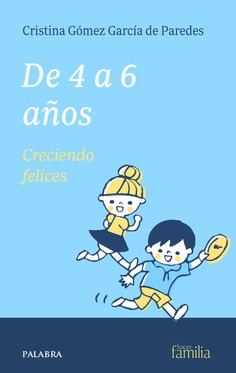
Published author:
Testimonials
“At our school, the Parenting Support Program has become a communication channel for parents to find the support they need in raising their children, and to see in Cristina and her team a source of guidance through the challenges that arise along the way.”
School leader — Shelton Academy, Miami FL.
“In four months, most of my daughter’s problems were resolved. What happened was that it didn’t go the way I initially thought. The change was so natural and in such important aspects of her development that I first assumed it was simply due to her natural maturation. But without a doubt, it was thanks to the process and the guidance we received.”
– Parent of a 10-year-old.
FAQ
Could you elaborate on the purpose of Parenting Without a Manual?
It was created as a reference point for addressing parenting challenges that often carry emotional weight but are part of a child’s natural educational process. The program is designed for parents who are aware of their educational responsibility and wish to support their children’s maturation process. Typical situations include tantrums, disobedience, excessive use of technology, sibling rivalry, low self-esteem or autonomy, emotional imbalance, or poor social skills.
In other words, it helps parents understand both the causes of persistent misbehavior and the emotional disconnection that may affect family or social harmony. Throughout a child’s development, parents often wonder whether they are doing things right. That moment of doubt can become an opportunity to reflect on what kind of parents we want to be versus what we are being. With external and objective support—grounded in child development knowledge—parents can assess whether their expectations are realistic and make small changes in family dynamics that benefit everyone.
What makes this approach different from others?
My work focuses on parental guidance rather than working directly with the child. Experience shows that changes have a deeper and longer-lasting impact when they come from the parents themselves. This is why the intervention focuses on empowering parents to understand what’s happening and to make effective changes at home.
Sessions are held on a monthly basis, unlike most professionals who work directly with children on a weekly schedule. My approach is based on the belief that parents are the most influential figures in their children’s lives. By providing them with a compassionate understanding of their child’s behavior and practical tools to enrich family interactions, many tensions can be naturally resolved.
What are the typical ages of the children whose families you work with?
Most families I work with have children between 3 and 12 years old.
What can parents expect to achieve after a five-session process?
At first, parents often think the problem lies entirely in their child’s behavior. What they discover through our sessions is that the child’s expression usually reflects an underlying need or a call for change in the parents themselves. Once that need is identified and small adjustments are made, the intensity of the child’s behavior naturally decreases, becoming part of their normal developmental process.
As a result, the quality of the parent–child relationship improves, and family life becomes more balanced and connected.
Book a Private Consultation
Parents who are interested choose a time that works for you. Please complete the secure payment to confirm your appointment. Sessions are held online. English and Spanish available.
“The purpose of Parenting Without a Manual is to make it easier to understand what is happening with our children that concerns us. This way, from an objective perspective, we can accompany, advise, and guide them with strategies that strengthen our relationship with them.”
Cristina Gómez García de Paredes
Contact
General inquiries: info@parentingwithoutamanual.com
Schools: schools@parentingwithoutamanual.com
Cristina
Gómez Garcia de Paredes
A small river named Duden flows by their place and supplies it with the necessary
- Phone:+1 (859) 254-6589
- Email:info@example.com